Peer-Reviewed Articles

Artificial Theological Intelligence: Doctrinal Adequacy, Contextual Disambiguation, and Catholicity | Modern Theology

This essay develops a social-practical account of Christian doctrine: theology is adequate when, under Scripture’s authority and the Spirit’s work, ecclesial speech proves semantically and pragmatically fitting, pastorally fruitful, and doctrinally answerable. Contemporary theology needs disciplined disambiguation more than doctrinal differentiation, since shared confessional sentences and infrastructures can be deployed toward divergent, even harmful, ends across racialized and global contexts. Against a Christendom reflex for doctrinal differentiation, the essay proposes artificial theological intelligence, a Spirit-formed competence for contextual discernment, catholic learning, and answerable judgment. Recent multilingual large language model AI research serves as a heuristic. Two Korean American case studies test the proposal.

Artificial Theological Intelligence: Doctrinal Adequacy, Contextual Disambiguation, and Catholicity | Modern Theology Read More »

Journal Articles, Peer-Reviewed Articles

The 1517 Project and World Christianity: Migration and the Uses of Doctrine | International Bulletin of Mission Research

This article investigates the complex interplay between Christian doctrine, migration, and the varied social circumstances of Christianity’s faith and practice. By framing the Protestant Reformation, and its afterlives, through the metaphorical and interpretive lens of the “1517 Project,” we explore how Christian doctrine has been shaped by and shapes social conditions and structures within Christendom. This exploration contrasts the role of doctrine in the contexts of Anglo-European Christianity and in post-Christendom settings such as Asian Christianity.

The 1517 Project and World Christianity: Migration and the Uses of Doctrine | International Bulletin of Mission Research Read More »

Journal Articles, Peer-Reviewed Articles

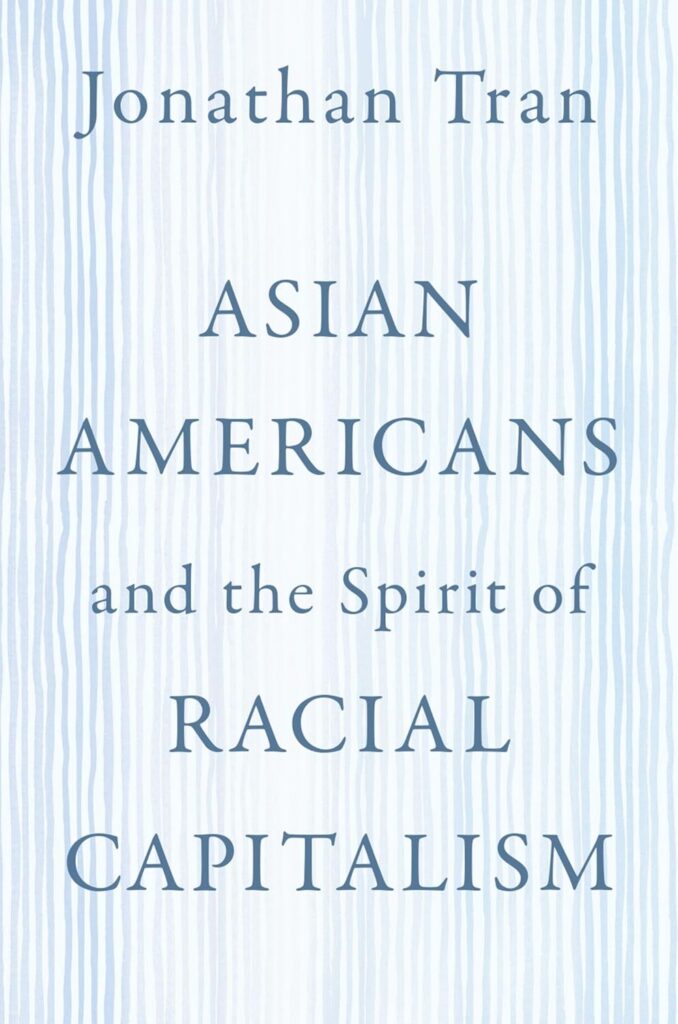
Asian Americans and the Spirit of Racial Capitalism by Jonathan Tran | Modern Theology

Tran’s Asian Americans and the Spirit of Racial Capitalism is a work in constructive Christian theology that presents two competing scripts on race for life on this planet. The first is characterized by racial capitalism, where the dynamics of use, identity, and justification facilitate the domination and exploitation of the “have-nots” by the “haves.” Tran uses the Christian doctrine of sin to characterize this kind of political economy as the privation of God’s deep political economy in creation and salvation (16, 275). The alternative vision to the fallen political economy of racial capitalism is the dynamics of participation, revelation, and reparation in and through God’s deep economy.

Asian Americans and the Spirit of Racial Capitalism by Jonathan Tran | Modern Theology Read More »

Book Reviews, Peer-Reviewed Articles

“Evangelical or Mainline? Doctrinal Similarity and Difference in Asian American Christianity: Sketching a Social-Practical Theory of Doctrine.”

This article takes Asian American Christianity to be an analytically productive religion for advancing a theory of Christian doctrine. This is in large part due to the trans-Pacific character of Asian American Christians who, by virtue of their racialization, make explicit the different social circumstances—from Anglo-European Christians—as well as shared ends in which Christian doctrinal commitments operate. Asian American Christians problematize the conventional wisdom assumed in the academic and public discourses concerning Christianity in the US. One of the primary set of categories in the discourses about Christianity in the US is the theological difference between evangelical and mainline Protestants. Moreover, these theological and doctrinal categories are taken to describe and define these two social groups of Christians. By centering empirical studies of Asian American Christian faith and practice, this article claims that doctrinal similarity and doctrinal difference, such as that between evangelical and mainline Protestants, do not simply explain social group similarity or difference as assumed by conventional wisdom. Instead, these Asian American case studies point to the need for a new theory of Christian doctrine that can explain the normative significance of doctrinal similarity and difference in terms of the uses of doctrine.

“Evangelical or Mainline? Doctrinal Similarity and Difference in Asian American Christianity: Sketching a Social-Practical Theory of Doctrine.” Read More »

Journal Articles, Peer-Reviewed Articles

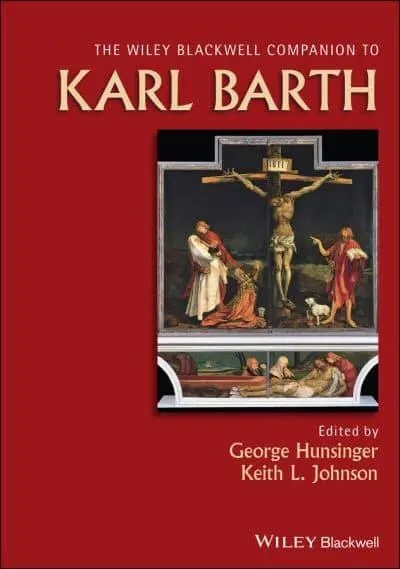
Barth on Creation | The Wiley Blackwell Companion to Karl Barth: Barth and Dogmatics

Karl Barth’s Church Dogmatics is characterized as a whole and in its parts by a thoroughgoing christological determination where Jesus Christ is the one and only criterion for Christianity’s basic beliefs. The rethinking of the whole of Christian doctrine from a center in Christ earned Barth’s theology the reputation for not only being “christocentric” but for being “christomonist” – that is, for denying the reality of creation and its creatures. Barth, especially in his later work, explicitly denied the negative implications of “christomonism” by affirming creaturely reality.

Barth on Creation | The Wiley Blackwell Companion to Karl Barth: Barth and Dogmatics Read More »

Book Chapter, Peer-Reviewed Articles
Scroll to Top